


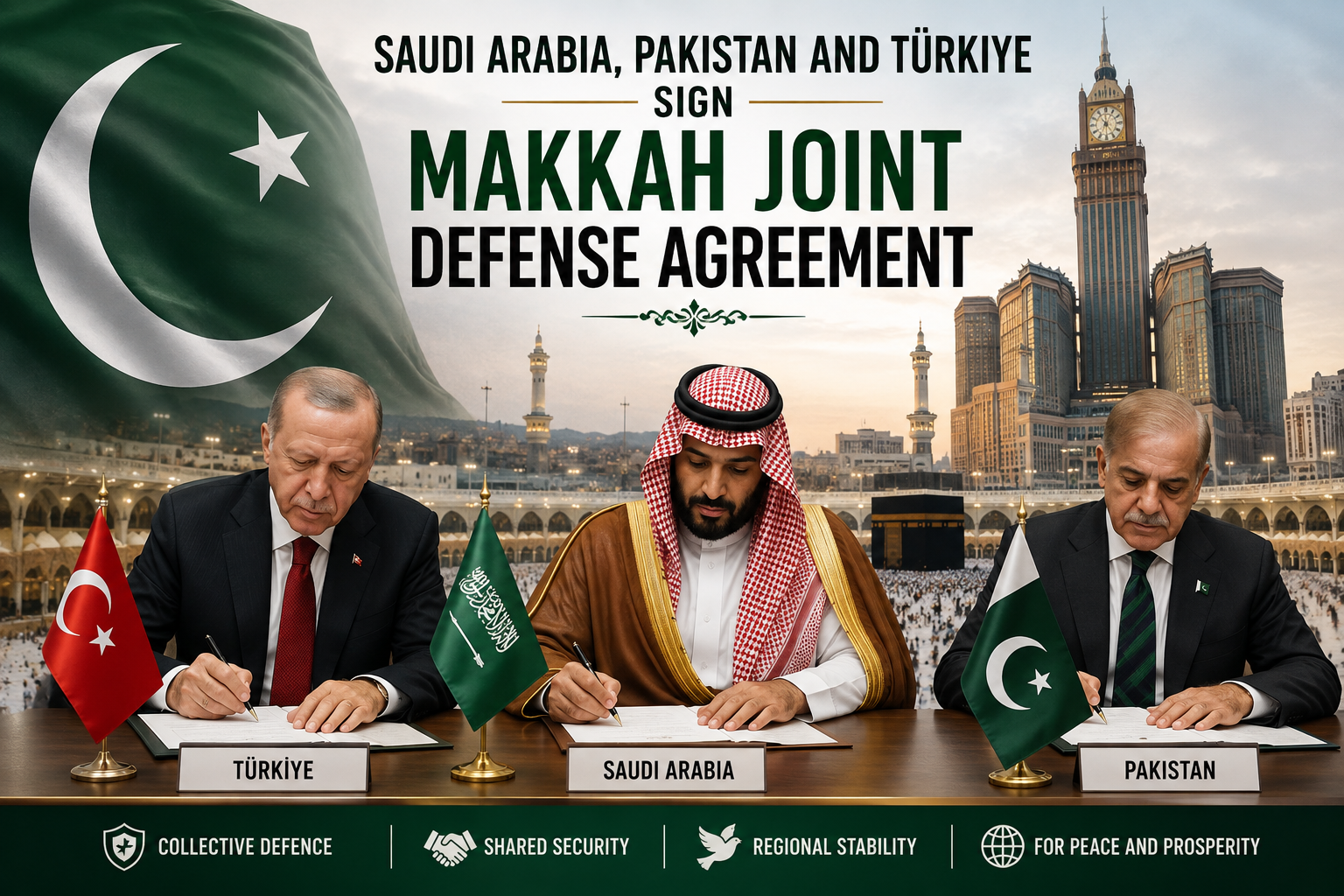
Kathmandu: Saudi Arabia, Pakistan and Türkiye have signed the ‘Makkah Joint Defense Agreement’, a development that could mark an important shift in the security dynamics of West Asia.
The security cooperation among three influential countries in the Muslim world has the potential to introduce a new dimension to the region’s strategic balance. The agreement brings together Saudi Arabia’s economic and strategic influence, Pakistan’s military capabilities and Türkiye’s growing regional diplomatic and strategic role.

Makkah, one of the holiest cities in Islam, also gives the agreement considerable political, strategic and diplomatic significance. The choice of Makkah as the venue adds a symbolic dimension to what is essentially a defense and security arrangement.
The agreement comes against the backdrop of longstanding conflicts, insecurity and geopolitical competition in West Asia. While greater security cooperation could strengthen collective defense and deterrence, the emerging mechanism should ideally contribute to regional peace and stability rather than intensify strategic rivalry.
Experts and policymakers are likely to closely examine how the agreement will operate in practice, particularly the extent of military cooperation and the commitments the three countries have made toward one another.
Transparency, dialogue, respect for national sovereignty and peaceful resolution of disputes will remain important if the agreement is to contribute positively to regional stability.
The development is also significant for Nepal. A large number of Nepali citizens work in the Gulf and other parts of West Asia, making changes in the region’s security environment directly relevant to Nepal’s citizens, economy and foreign employment sector.
Nepal therefore needs to closely monitor the changing security landscape in West Asia while formulating its approach based on national interests, the safety of Nepali citizens and the principles of balanced diplomacy.
Ultimately, the significance of the Makkah Joint Defense Agreement will depend not simply on its military strength, but on its contribution to regional peace, stability and cooperation. Its long-term relevance will be measured by whether it becomes a mechanism for shared security or contributes to another cycle of strategic competition in the region.


प्रतिक्रिया
सम्बन्धित खवर